 Louis Hannibal Nez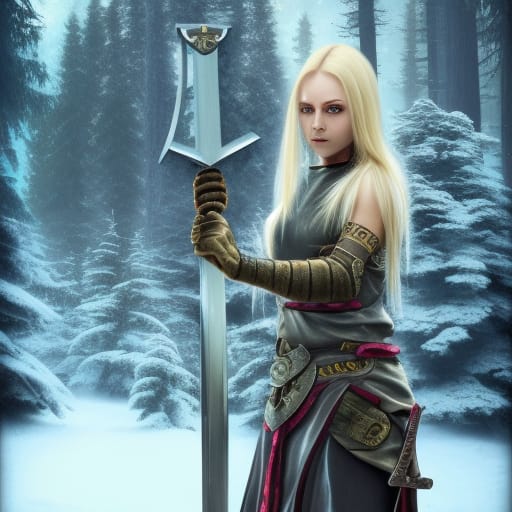
History and remembered origins
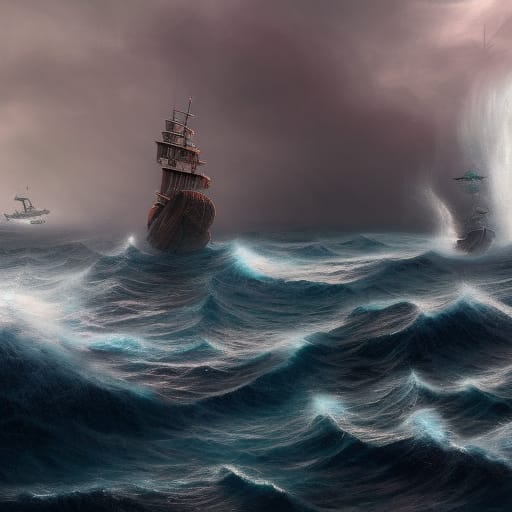
Walkinur memory begins at sea. Their songs tell of crews that crossed dangerous waters, took settlements and founded new communities, but they also preserve a sacred beginning: Yrnvar cast land into the world and the twin Kanu sacrificed their own substance to form islands where the first Walkinur could live.
The archive treats this as a creation tradition carried through song. It expresses how the people understand land, sacrifice and belonging; it is not presented as an objective account of Zyllyön's physical origin.
Migrations and kingdoms
During the migrations remembered around the Rdrilveria exodus, Walkinur fleets sailed north toward snowbound islands and fjords. Their settlements eventually became four enduring kingdoms: Erkedii, Walkivalkivu, Valkivaladuu and Kalamalah.
Songs remember the Battle of Valkivari, the Treaty of Vadronkar and later unions between kingdoms as turning points. Their exact historical interpretation remains open to the wider chronology, but together they explain a political identity forged by invasion, trade and temporary alliance.
Leadership and social standing
Older tribal communities were led by caudillos chosen for judgment and courage. As tribes merged into larger peoples, four principal rulers emerged and their authority became dynastic, although councils, renowned elders and respected artisans continued to influence collective decisions.
Walkinur society is not remembered as rigidly stratified. Standing is earned through service, bravery, mastery of metalwork, navigation, knowledge and deeds considered beneficial to the community.
Relations with other peoples
Distance protected the northern archipelago from many campaigns, allowing its kingdoms to develop maritime alliances based on trade and mutual aid. Relations with the Morguendis became defined by invasion and resistance, while disputes with Bredryvek and Klaevdros communities survive in accounts of contested coasts and southern waters.
These relationships vary by kingdom and period; they should not be read as permanent attitudes shared by every Walkinur individual.
Belief and death
Walkinur religion places Yrnvar above the twin Kanu. Kanu of Day is associated with wind, warmth, fertility and the light that guides ships. Kanu of Night governs darkness, nocturnal tides and the destructive force of storms. They are opposites, but neither is complete without the other.
Coastal cremations take place near dawn or dusk so both may witness the farewell. Ashes are given to the sea, while songs promise the dead a passage toward Yrnvar's halls.
Honor, weapons and craft
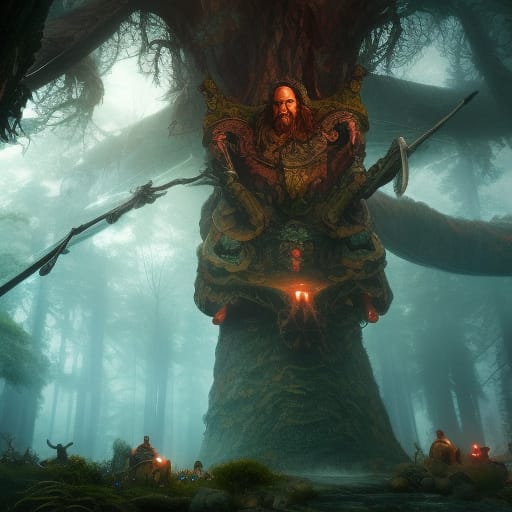
Walkinur smiths are renowned for armor, axes and great swords. A weapon is not merely purchased: receiving a personalized piece from a master smith is an honor that must be earned through reputation, conduct or service.
Women and men train with the same heavy weapons. Martial skill carries prestige, but so do the knowledge and discipline required to create the objects on which warriors depend.
Language and sung memory
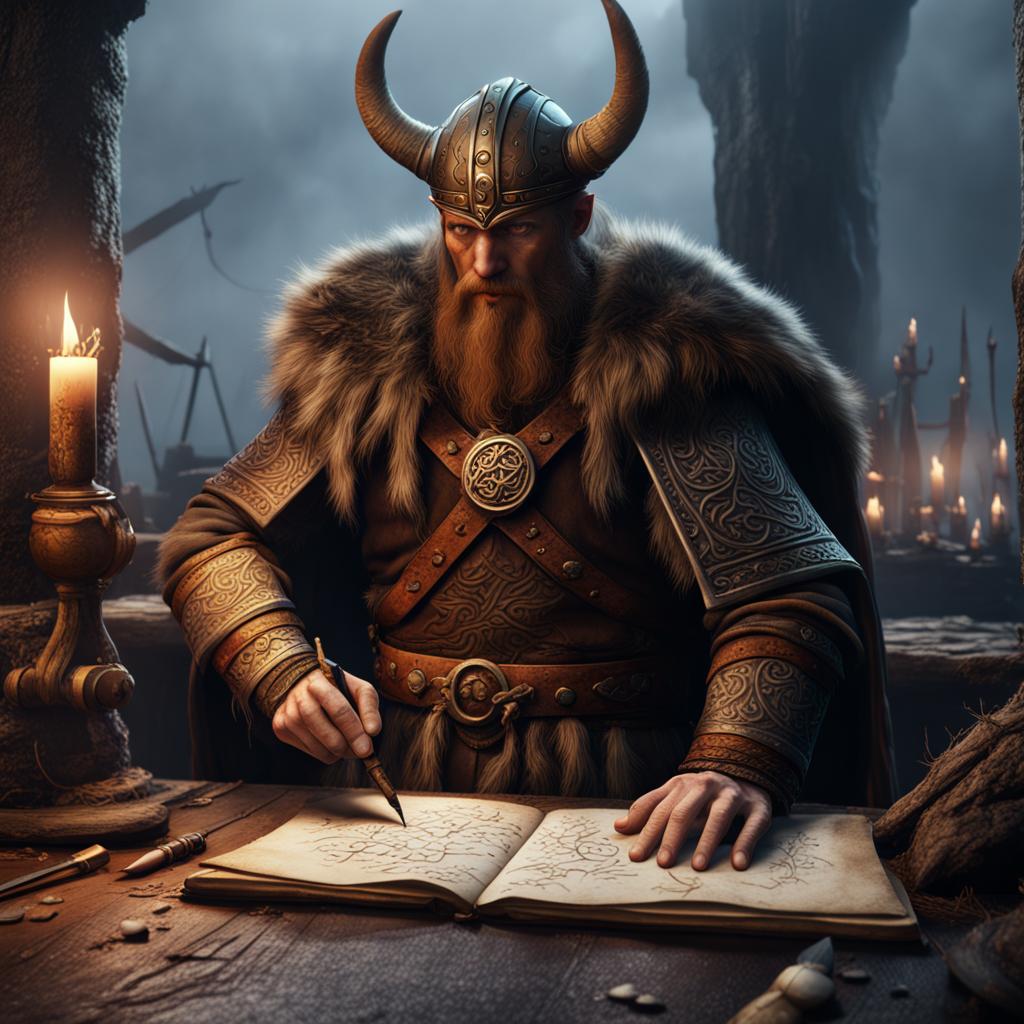
The Walkinur language contains a broad vocabulary for sea, weather and terrain. Its runic writing is carved into wood and stone, yet the strongest vessel of memory remains the song.
Epic cycles preserve genealogies, battles, rites, craft knowledge and warnings. Elders able to remember and interpret them serve as living archives rather than simple performers.
Dress and personal signs
Traditional clothing uses wool in natural blues, pale blues and yellows. Leather, wood and occasionally metal protect the body in battle; jewelry, braided hair, carved pieces and stones associated with natural forces appear more often in times of peace.
Tattoos and body paint can mark achievements, clan belonging or spiritual protection. Their meanings belong to specific communities and should not be reduced to ornament.
Art and architecture
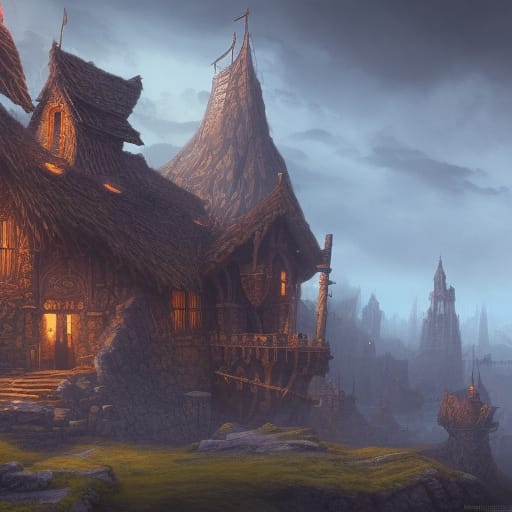
Walkinur buildings combine timber and stone in robust forms suited to cold, wind and snow. Steep roofs, carved supports and public halls give each settlement a practical monumentality.
Temples and communal structures carry wooden or stone reliefs, painted scenes and runic stones. Architecture does not merely shelter the community: it makes its memory physically visible.
Music, dance and Korvall
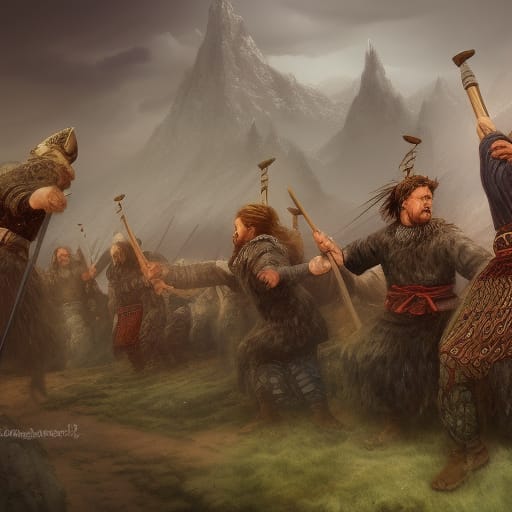
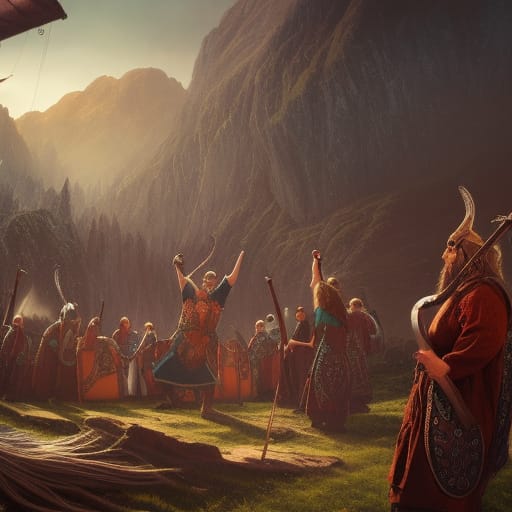
The Korvall Solstice is among the most important ritual gatherings. Competitions in wrestling and archery test skill and courage before drums and lutes take over the communal space.
Dances are vigorous and coordinated, while songs move freely between celebration, devotion and historical memory. Festival is therefore entertainment, instruction and public renewal at once.
Economy and resources
Forests, rivers, fertile pockets of soil and mineral-bearing mountains sustain hunting, fishing, agriculture and metalwork. Northern waters provide prized species; inland cultivation favors rye, nuts and other crops suited to the climate.
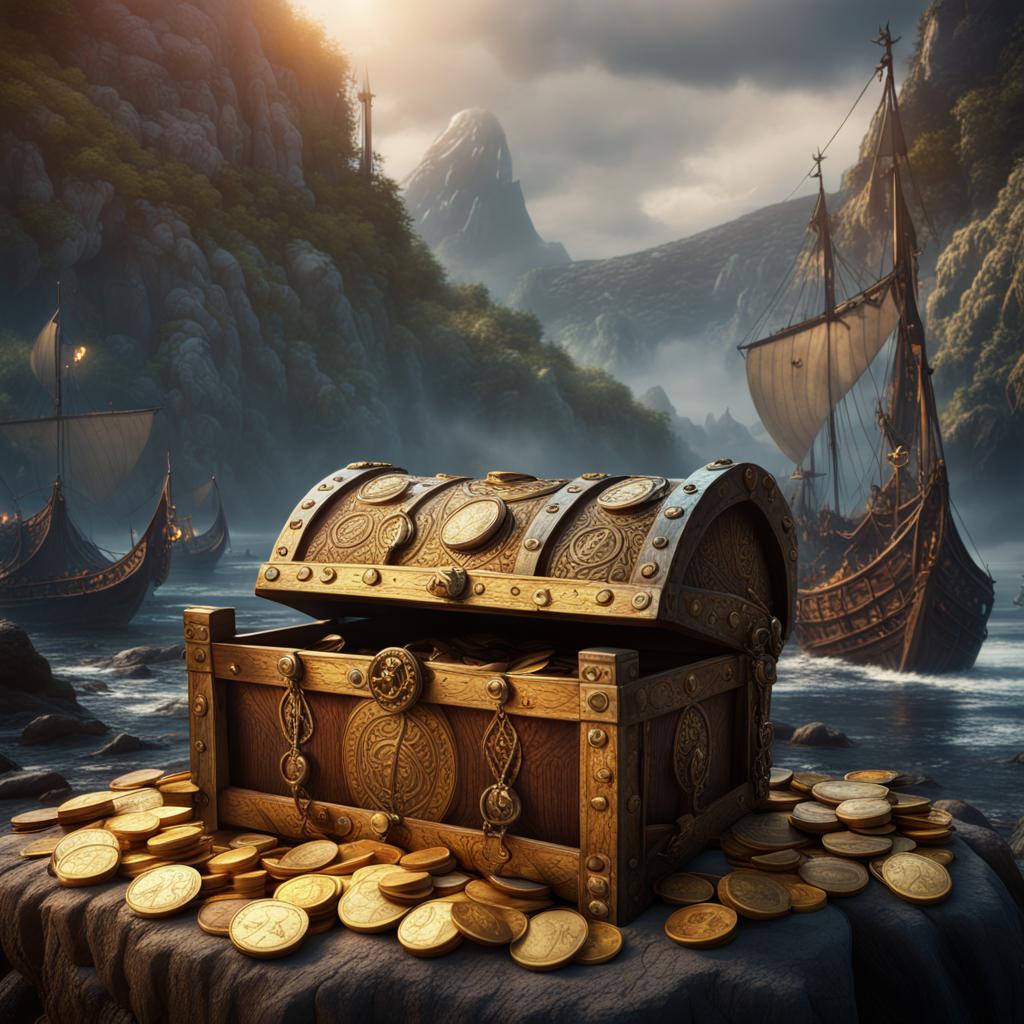
Wood, hides, steelwork and mead circulate beyond the archipelago. Within the kingdoms, the oval metal Runa bears symbols of Walkinur history, although it has limited use outside their sphere of influence.
Education
Education is communal and largely oral. Elders, navigators, smiths, growers and warriors train younger people through close apprenticeship, embedding knowledge in work instead of separating it from daily life.
Songs provide the shared framework: through them one may learn history, ritual, combat principles, legends and the responsibilities expected within the community.
Family and union
Most households are nuclear and relatively small. Responsibilities are flexible, and women and men participate in public decisions, craft, navigation and defense according to skill and circumstance.
Marriage is understood as a chosen and sacred union rather than a routine political arrangement. Ceremonies may last several cycles and include vows, music, food and rites dedicated to both Kanu.
Yggdrasil and emblems
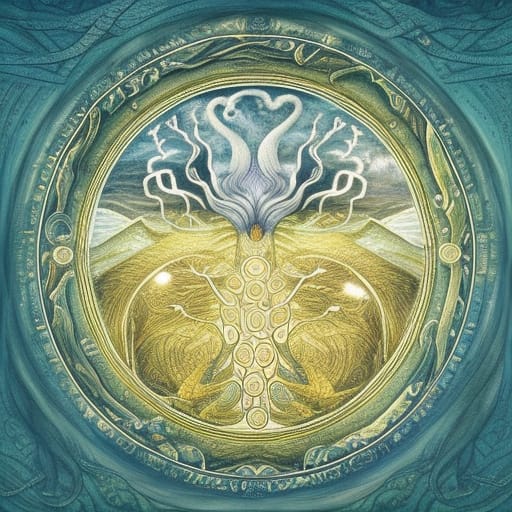
The emblem called Yggdrasil—translated in the archive as Sea of Life—expresses the connection between spiritual existence, the ocean, protective deities and the natural world. Golden and silver runes recall a past the Walkinur place before the Rdrilveria migrations.
Caudillos and distinguished warriors also carry standards whose symbols identify communities, sacred protection and remembered deeds.
Adaptation and future challenges
The Walkinur have adopted new navigation, construction and agricultural techniques without abandoning the songs that organize their identity. Their culture survives because it can incorporate useful change and still recognize itself.
Their kingdoms face pressure from expansionist powers and the difficult ambition of establishing stable continental settlements. The central challenge is not simply territorial survival, but ensuring that language, craft and memory remain alive through whatever comes next.