 Louis Hannibal Nez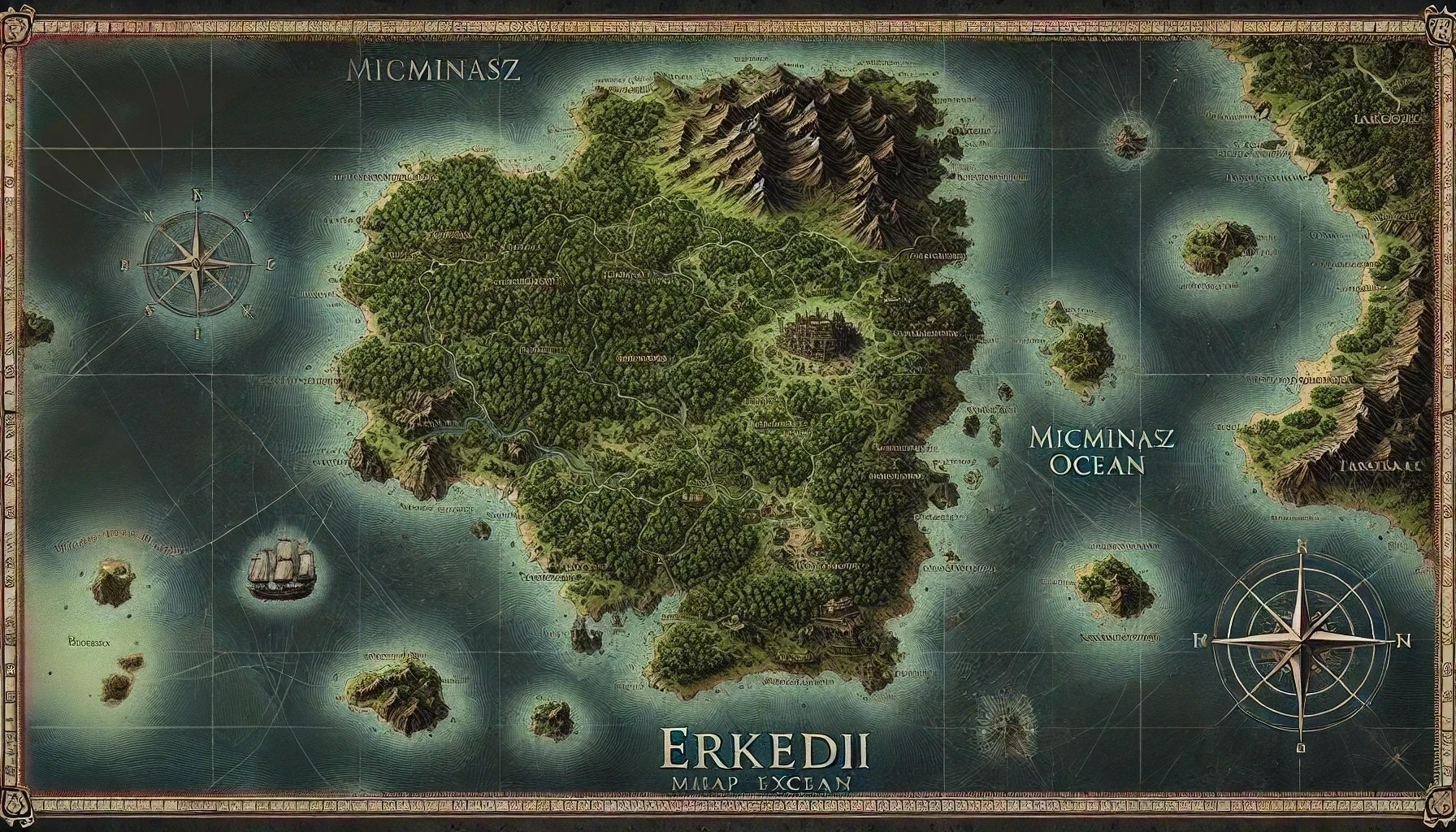
History
The island of Erkedii has remained a Walkinur homeland through eruptions, migrations and distant wars. While other communities crossed the sea or established settlements farther south, its inhabitants stayed close to the coast that had shaped them. Isolation did not make the kingdom inert: it made continuity one of its deepest values.
The name Erkedii evokes fortitude, courage and endurance—virtues carried through Walkinur songs and communal memory.
Geography and climate
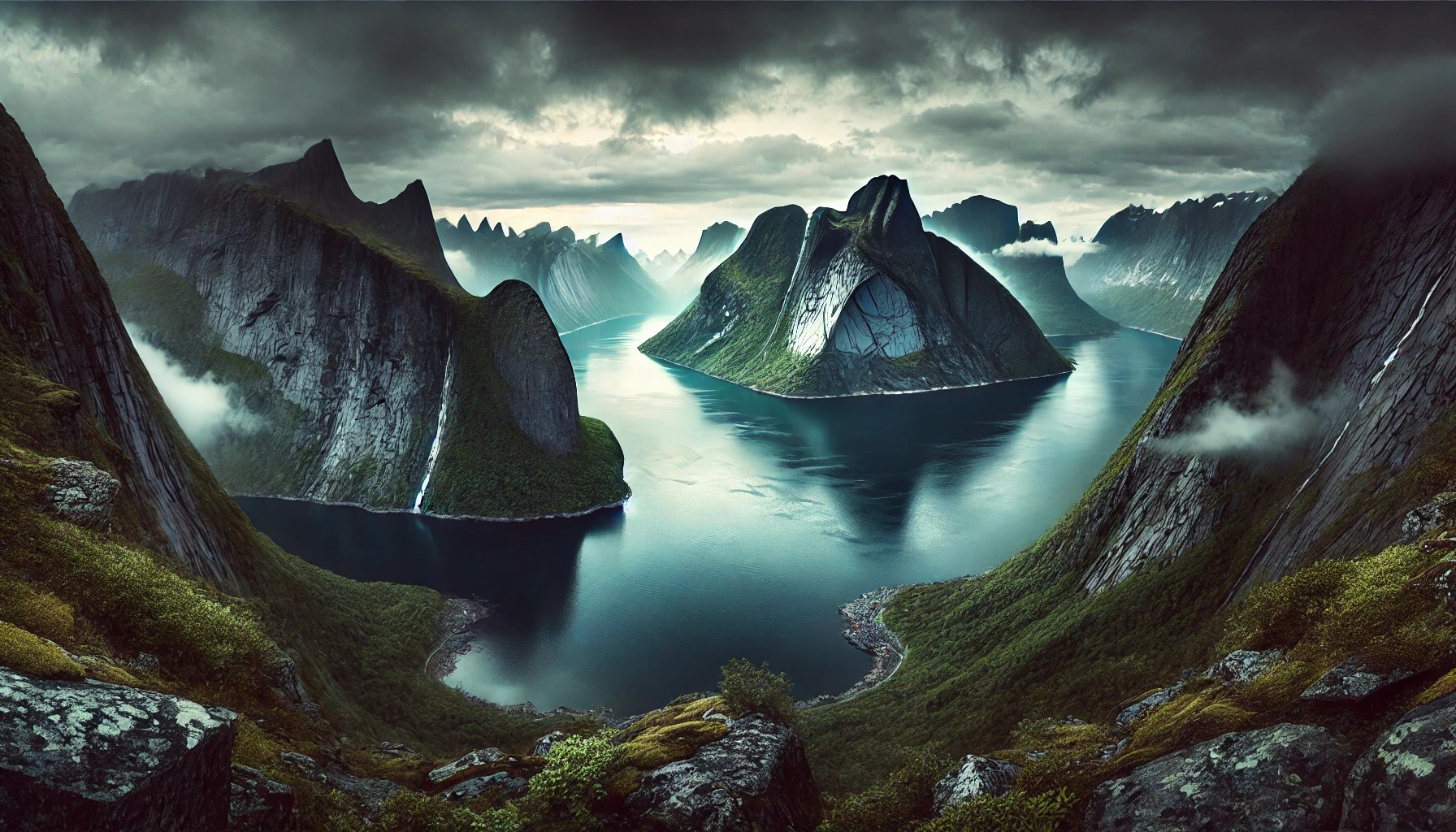
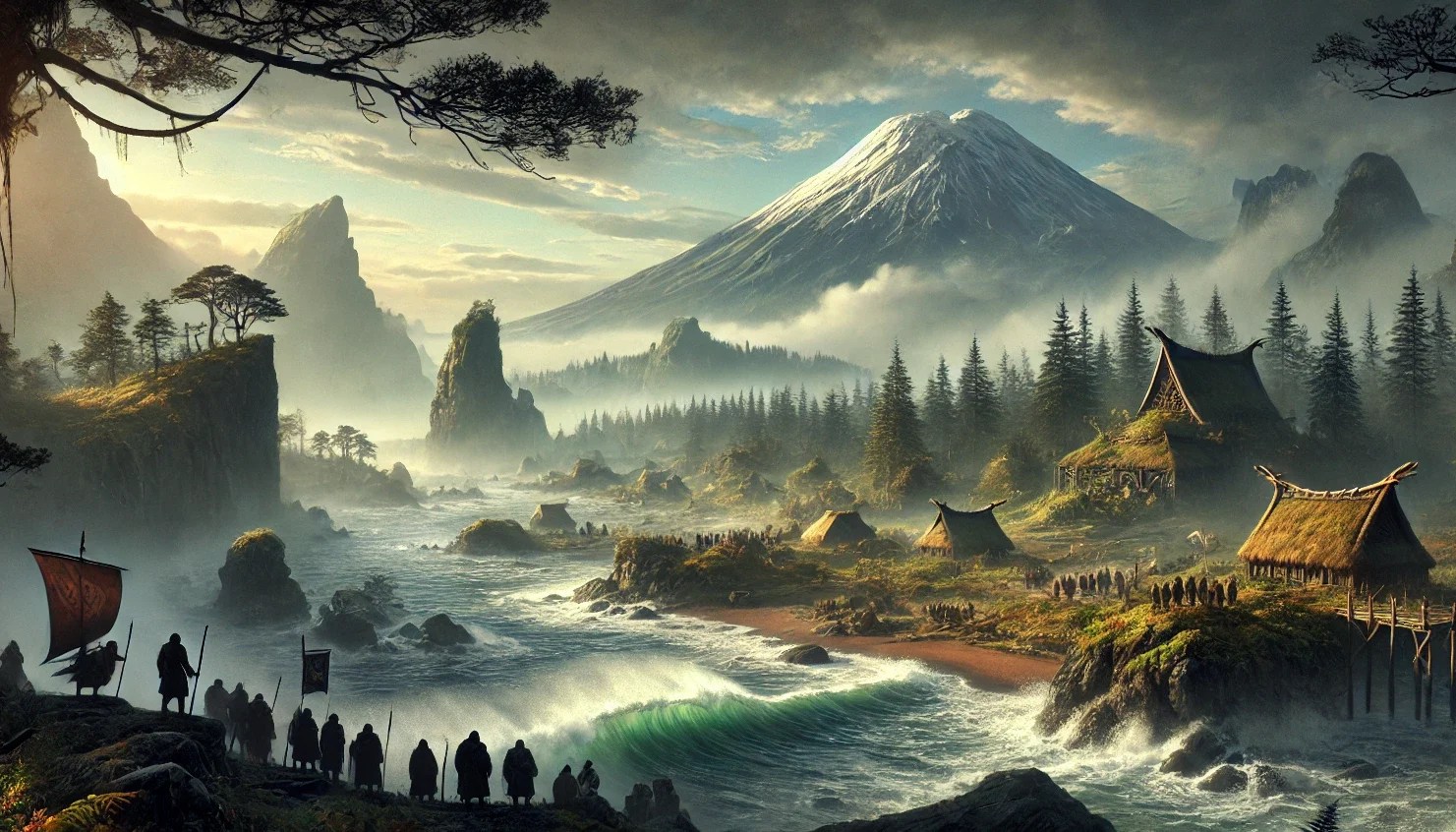
Erkedii rises from the cold waters of the Micminasz Ocean. Fjords shelter fishing grounds and ports, while the Edieet volcano dominates the north, bound to the Spear Range and visible from almost every inhabited part of the island.
Cold currents, storms and volcanic soil define the kingdom. Forests, rocky beaches and cultivated ground exist under the constant possibility of ash and tremors; preparedness is therefore part of daily life.
Architecture
Homes and public buildings use volcanic stone and dense local timber. Their heavy structures retain heat and withstand tremors, snow and abrasive winds. Construction knowledge passes between generations alongside warning systems and evacuation routes tied to Edieet's activity.
Society and government
Cooperation is not ceremonial in Erkedii; it is a condition of survival. Fishers, growers, navigators, craftspeople and elders each assume responsibilities whose value is measured by their service to the community.
King Kirdah the Good rules with a small circle of advisers. Elders versed in Edieet's behavior work beside younger apprentices, joining political authority to accumulated observation rather than separating the two.
Economy and navigation
Fishing sustains much of the island and supports trade with the neighboring Walkinur kingdoms of Kalamalah and Valkivaladuu. Erkedii sailors are respected for navigating the difficult currents of the northern fjords, even though most remain within sight of familiar coasts.
Volcanic soil supports limited agriculture. Wool, carved wood, woven histories and other crafts turn the resources of a demanding environment into both livelihood and cultural record.
Culture and education
Knowledge is transmitted orally, through apprenticeship, song, carving and textiles whose patterns preserve events remembered by the kingdom. Education is inseparable from practical life: navigation, shelter, cultivation and volcanic preparedness are learned through those who have practiced them.
Black and red recur in clothing and ceremony, joining the darkness of volcanic rock to the force of life. In the rite known as the Passage of the Flame, young people carry fire toward Edieet as a public sign of maturity and responsibility.
Belief
Erkedii shares the Walkinur reverence for Kanu of Day and Kanu of Night, yet the island also preserves beliefs centered on Edieet. Songs describe an ancestral presence within the volcano—protector and trial at once.
During the Awakening of Fire, bonfires, dances and invocations express gratitude for the island's fertility and ask protection for the coming cycle. The archive records these as Erkedii traditions: living faith, not verified cosmological history.
A kingdom that remained
Erkedii's identity does not rest on invulnerability. It rests on adaptation: rebuilding after the earth moves, reading the sea, preserving knowledge and choosing the island again. Its survival is the continuing testimony of a Walkinur people who made endurance a form of belonging.