 Louis Hannibal Nez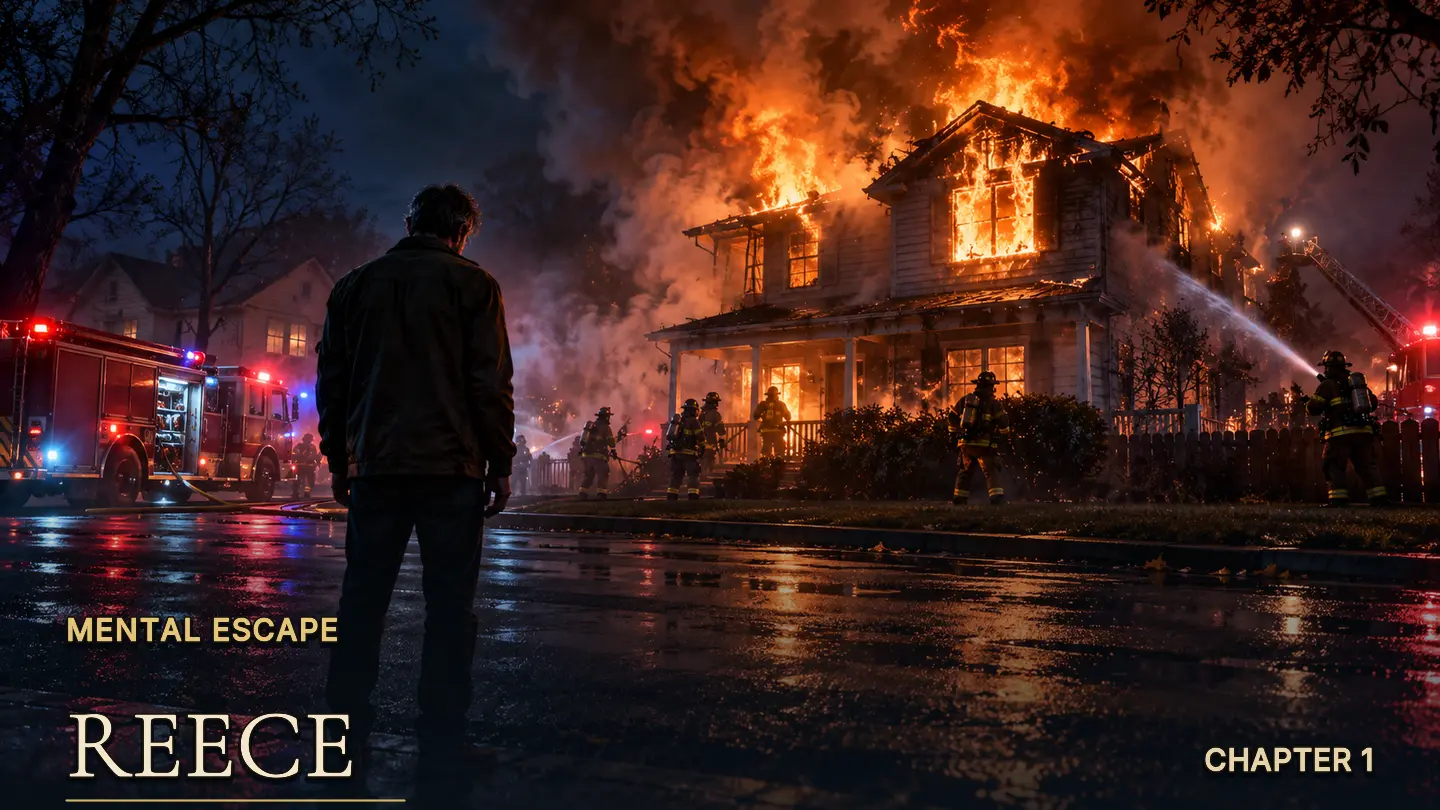
An alarm clock vibrates at five forty-six on a winter morning.
Reece Strangford opens his eyes before the second pulse and turns off the alarm. He does not switch on the light. Maddie sleeps on her back beside him, one hand open on the striped sheet, her hair spread across the pillow. Reece remains seated for a few seconds, waiting for sleep to finish leaving him.
On the phone screen, the schedule is unchanged from the night before: two surgical procedures, a consultation before noon, and a shift until the night team arrives. No emergencies are expected. Reece reviews the schedule anyway.
He showers, shaves, and dresses in silence. On his way out of the bathroom, he passes Celestine’s room. The door is ajar. His six-year-old daughter sleeps on her side, an open book beside her pillow. Reece recognizes the page: he left it there himself the night before, after reading her two chapters.
He stops in the doorway. If he goes in, Celestine may wake up and ask for the third chapter; he will have to tell her no and leave with the goodbye unfinished. Reece pushes the door just a little farther, until it blocks the light from the hall, and continues toward the kitchen.
Maddie is already there, wearing a robe over her nightgown. Reece is making coffee when she looks at the oven clock.
“I thought you were leaving later today.”
“The schedule changed.”
“Did they tell you last night?”
“At the last minute.”
Maddie nods. Reece pours himself coffee and remains by the window. Neither of them speaks for a while. A sheet of paper folded into quarters lies on the table. He opens it.
Celestine has drawn the three of them in front of a square house, beneath a tree that occupies almost the entire page. None of the figures has hands. The sun, on the other hand, is colored so heavily that the pencil has marked the paper.
“She left it for you,” Maddie says. “She asked me not to put it away with the others.”
Reece runs his thumb along the edge of the paper without touching the sun.
“I’ll take it with me.”
“She wants to show you one part afterward.”
“She can explain it to me when I get back.”
Maddie holds the cup between both hands. Reece searches for an answer that will not sound like an excuse and finds none.
Celestine appears a few minutes later, dragging her slippers. A pillow mark crosses her cheek, and she carries the book under her arm.
“Are you leaving already?”
“In a few minutes.”
“Will you be here when I get home from school?”
Reece looks at Maddie. She does not answer for him.
“I don’t know,” he says. “But tonight I’ll read with you before you go to bed.”
Celestine studies him as if searching his face for a firmer answer.
“It’s your turn to read the boat part.”
“I remember it.”
“That’s what you said last time, and you skipped a page.”
“Then you won’t let me forget today.”
The girl seems only half satisfied. She leaves the book on the table and goes to look for a pencil. Reece slips the drawing into the inside pocket of his jacket and kisses her forehead.
At six ten, he leaves the house. He checks the lock, walks down the three porch steps, and heads for the car. Before starting the engine, he sees Maddie behind the kitchen window. She raises her cup. Reece waves back and turns on the engine.
The drive to the hospital takes twenty-seven minutes. He follows the usual avenues, passes a bakery that has just opened, and waits through two traffic lights. At the second, a cyclist crosses with a large, badly adjusted backpack. Reece does not move until he sees him disappear from the street.
He arrives at six thirty-seven. He greets the guard, goes up to the locker room, and leaves his jacket in his locker. He takes out the drawing and props it against the metal door so it will not bend any further. Then he changes and reviews the morning report.
The resident is waiting for him beside the entrance to the surgical area. She holds an open folder; the band securing her hair is beginning to come loose.
“The first patient is ready. He’s nervous.”
“That’s understandable. I’ll speak with him before we go in.”
The man is about fifty. He keeps his hands crossed over his abdomen and squeezes his fingers whenever someone passes through the corridor. When he sees Reece, he tries to smile.
“Will you be there the entire time?”
“During the procedure, yes. Afterward, the anesthesiologist will stay with you until you wake up.”
The man looks at the closed operating-room door.
“What if something goes wrong?”
Reece explains what the team will do, which risks they will watch for, and how they will proceed if the operation does not develop as expected. He does not promise that everything will be fine. When he finishes, the patient stops squeezing his fingers.
“All right,” he says. “Let’s do it.”
In the operating room, Reece confirms the patient’s name and the procedure. The resident answers each item on the checklist. The nurse adjusts the equipment; the anesthesiologist reports that the man is stable. Reece scrubs in, puts on his gloves, and takes his place.
He speaks little during the procedure. He gives brief instructions and waits for the team’s confirmation before continuing. The resident follows his directions. The monitor’s rhythm does not change.
When it is over, Reece leaves the patient in the care of the recovery team and speaks with his wife in the corridor. She stands when she sees him.
“It went smoothly. He’s stable. You’ll be able to see him when he wakes up.”
The woman covers her mouth with one hand and closes her eyes for a moment.
“Thank you.”
Reece tells her where to wait. He does not tell her that there is nothing left to worry about.
The second procedure begins later than expected. Reece sees the consultation before noon, reviews tests, answers calls, and returns to the operating room. The hours accumulate without a clear break. The coffee he leaves beside the keyboard grows cold.
During a pause, he opens his locker. One corner of the sheet has curled. Reece smooths it with his palm and puts it back in the inside pocket of his jacket.
The second procedure ends late. Before he can change, an emergency in his specialty arrives. The night shift is delayed. Reece returns to the operating room.
When he can finally wash and change, the locker-room clock reads nine thirty-eight. His back aches between the shoulder blades. He finds a message from Maddie on his phone.
“Celestine fell asleep with the book. We’ve already had dinner. I’m finishing the dishes. After that I’m going to make some tea. The kitchen is still acting up; it’s leaking gas. We have to fix that. Are you going to be much longer?”
Reece writes: “I’m heading home. Don’t wait up.”
He reads the sentence and deletes it before sending it. He writes another: “I’m leaving now. I’ll let you know when I get there.”
He sends the message, puts away the phone, and puts on his jacket. Before leaving, he checks that he has the drawing. It is still in the inside pocket, protected between the lining and his chest.
The city is not empty. A bus moves along the avenue with almost no passengers. Kitchen lights remain on in several windows of houses and buildings. Reece pulls out of the parking lot with tense shoulders and his hands firm on the steering wheel.
The bakery he saw open that morning now has its shutters down. He stops at two traffic lights. At the second, a man asks for coins beside the window; no one lowers the glass. Reece waits for the light to change and continues.
An ambulance passes in the opposite direction, its siren on. Reece slows to let it cross. He follows it in the mirror until it disappears behind the buildings.
On the last avenue before turning toward his street, traffic stops. The car ahead pulls toward the curb and leaves a lane open. Reece moves forward a few yards. Above the trees, he sees an orange light that does not belong to any window.
He thinks of a transformer. Then he makes out the column of smoke.
He leaves the car at the curb before reaching the corner. He gets out without turning off the engine or closing the door. His house is at the end of the street. A fire engine occupies part of the road; an ambulance and a police vehicle block the entrance. Neighbors wait behind yellow tape, some wearing sleep clothes beneath their coats.
Flames pour from a low window and climb the wooden siding. Smoke covers the porch. Reece does not see the door until he is almost on top of it.
A firefighter blocks his way.
“Is anyone inside?”
“My wife. My daughter.”
“Where?”
“Upstairs. In my daughter’s room.”
The firefighter grips his shoulders. Behind him, a crew adjusts their masks. Reece looks toward the entrance. A sharp impact comes from inside.
“The crew is going in,” the firefighter says.
When the firefighter turns to shout an instruction, Reece breaks free and follows the crew onto the porch.
The heat strikes his face before he reaches the hall. He covers his mouth with his sleeve and moves forward in a crouch. The ceiling lights flicker; one goes out. Smoke erases the furniture and walls. A brief cough comes from upstairs.
“Maddie!”
There is no answer. He climbs the stairs gripping the banister.
“Celestine!”
At the landing, smoke moves toward him in waves. The bedroom door is open. A fallen beam cuts diagonally across the threshold, wrapped in flames. Through the gap it leaves against the wall, Reece can see the bed, the book on the floor, and Maddie bent over her daughter. His wife straightens when she sees him. One sleeve is scorched, and she holds one arm against her chest. With the other, she tries to lift Celestine and carry her to the door.
A burst of flame rises from the staircase and sweeps through the hall. Maddie backs away and covers the girl with her body. For an instant, Celestine lifts her face.
Reece moves forward. A firefighter reaches him from behind and wraps an arm around his chest. Reece tries to break free. Another man appears on the landing and grabs him around the waist. The room disappears behind the fire crossing the hall.
“Maddie!”
The two men drag him down the stairs. Reece clings to the banister; his fingers slide off. He searches for support against the wall, a frame, anything that might stop them. They do not let go. As he crosses the doorway, cold air strikes his face. He drops to his knees on the grass. The firefighters pull him away from the entrance. Reece tries to stand. On the upper floor, a window lights up completely. Behind the smoke, he thinks he sees two figures, one taller than the other.
“They’re there! I can see them!”
A flash illuminates the ground floor near the kitchen. The explosion comes an instant later. Glass from the window and other rooms shoots into the street. People crouch or take shelter behind the vehicles. Maddie’s message returns to Reece in its entirety: the kitchen is still leaking gas. A paramedic brings a mask toward his face. Reece pushes it away and searches for the window again.
“You can’t go back in.”
He knows that without equipment he will never reach them. He also knows what will happen if he goes back in and someone has to rescue him. The certainty does not make him stop fighting. The firefighters hold him while he pushes, twists, and pushes again. Just then, a crack runs through the structure. The central section of the roof collapses inward. The roar covers the voices in the street.
He stops struggling, but only for a second, not because he accepts what has happened; he simply can no longer hear anything else. They sit him in the ambulance and adjust the mask. When he tries to pull it away, a paramedic holds his hand. Reece keeps his eyes on the house. Every time someone comes out, he searches for a face among the masks. The night advances without order. The fire slowly gives way, but the crews continue moving in and out through the smoke.
Reece does not know when he stops shivering from the cold or when the sky begins to lighten. The siren of another ambulance fades in the distance. At some point, the paramedic leaves him sitting on the edge of the ambulance, a blanket over his shoulders. Reece keeps watching the entrance. The house has lost its roof. The windows are black openings; smoke no longer rises in columns, but in low shreds the wind drags across the yard.
The fire engine’s display reads six fifty-two. A firefighter comes out of the house and removes his helmet. He looks toward Reece. He says nothing. Reece waits for someone else to come out.
No one does.