 Louis Hannibal Nez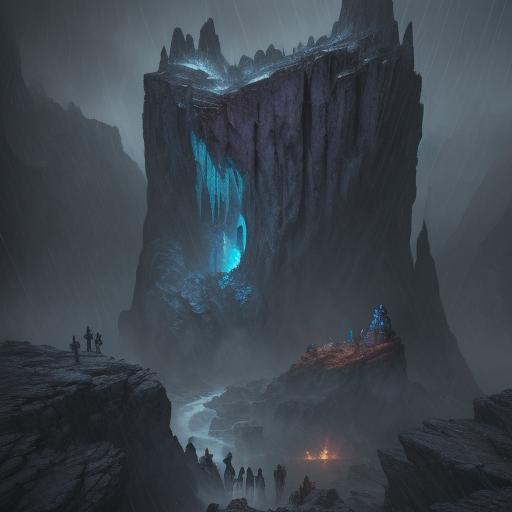
An island at the limit
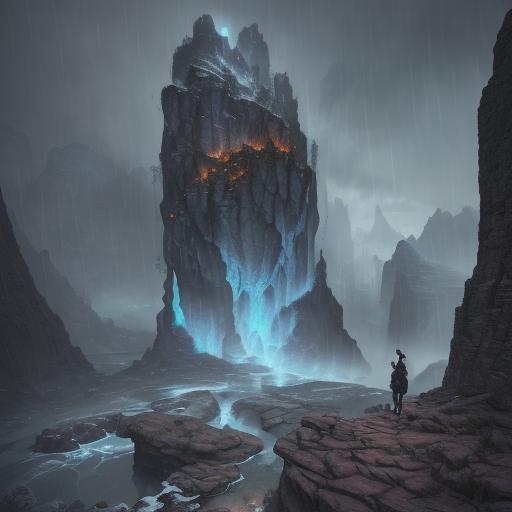
The Vurian inhabit Plomvuria, an isolated rock near the far north of Zyllyön. Violent winds, extreme cold, unstable terrain and contaminated pools make remaining outdoors dangerous and turn every resource into a matter of collective survival.
Their oldest accounts place them on the island before and after the migrations associated with Rdrilveria. The exact sequence is unresolved; what survives clearly is their refusal to abandon the place where Hermofrolote is believed to lie frozen.
Hermofrolote and remembered origin
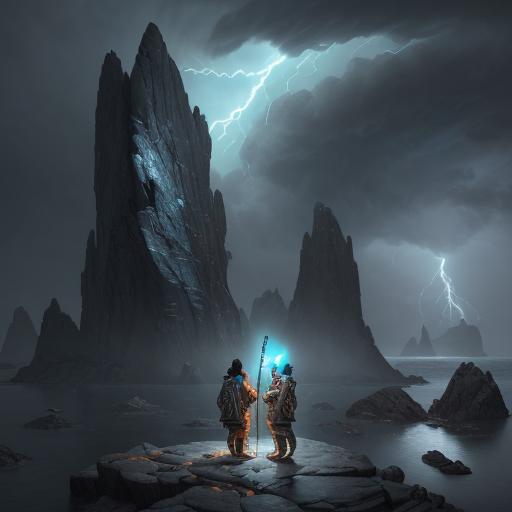
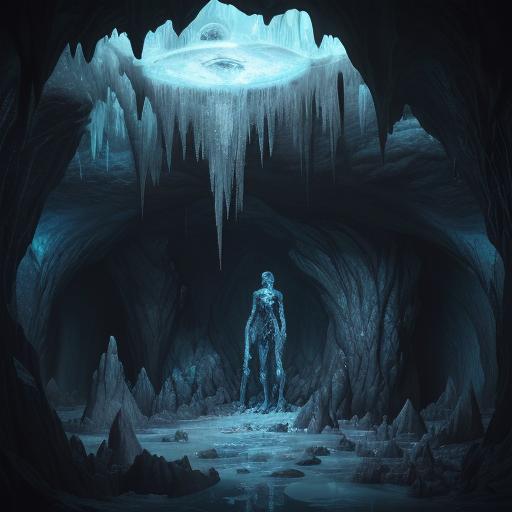
Vurian tradition says their people were called into existence by Hermofrolote, a disfigured living being preserved beneath the permafrost. They believe it speaks without moving its mouth and periodically awakens to restore order.
The archive confirms only the cultural centrality of this buried presence. Whether Hermofrolote is a deity, a living organism, a remnant of another age or something else remains outside the verified record.
The Triumvirate
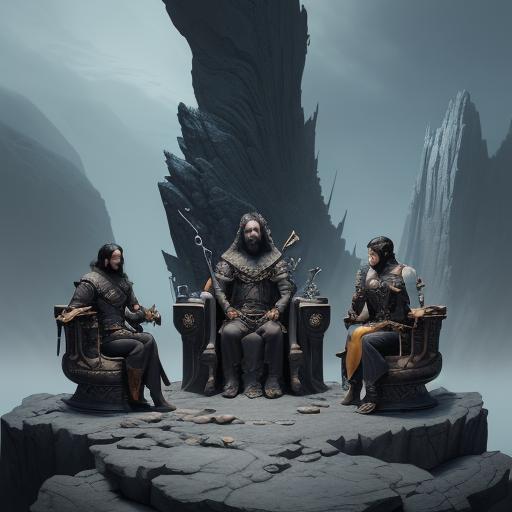
Three leaders govern Plomvuria. They are respected for knowledge, endurance and their ability to direct the community through environmental crises. Their authority is reinforced by initiation rites and their claimed proximity to Hermofrolote.
There are no stable classes in the conventional sense. Every able individual must contribute, while physical resistance, practical judgment and usefulness determine influence more than accumulated wealth.
Isolation and outsiders
Vurian contact with other peoples is exceptional. Ships sometimes approach in search of trade or alliance, but Plomvuria interprets strangers primarily as possible invaders.
Old accounts describe receptions marked by violence and very few successful exchanges. This is a product of isolation and fear, not proof that every Vurian responds identically to the unknown.
Religion, sacrifice and night beasts
Ritual life asks Hermofrolote for food, fertility, health and protection. The harshest ceremony recorded is the nocturnal Rite of Disfigurement, in which the community offers a life altered by force to secure divine favor.
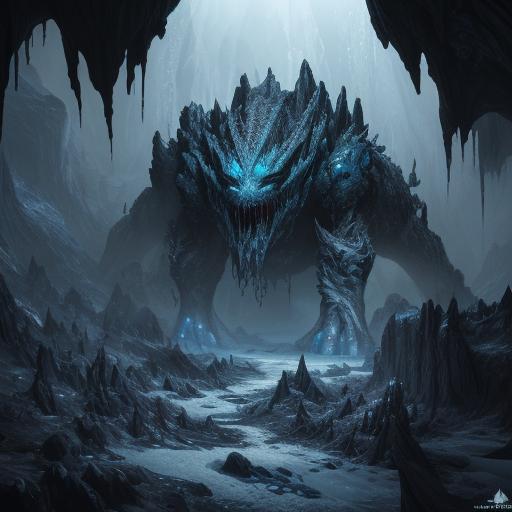
Those judged to have failed Hermofrolote may be taken below ground. Tradition claims they return as amorphous, hungry night beasts. The archive preserves the belief and its social consequences without confirming the supernatural explanation.
Bodies, birth and death
Facial differences present at birth are interpreted as marks of favor. Historical reports also describe forced disfigurement, especially when families feared that an unmarked child lacked protection. The practice is recorded as an element of Vurian religious violence, not softened into decoration or neutral custom.
The dead are wrapped in marine hides and lowered into Uhu z' oko, a pool that dissolves the body. Songs accompany the descent so the deceased may become part of Plomvuria's frozen ground and, in Vurian belief, of Hermofrolote itself.
Language and communication
Vurian is transmitted orally and has no established writing system in the surviving dossier. Knowledge therefore depends on memory, repetition and respected elders.
Because the wind can erase the human voice outdoors, the community also uses a system of gestures for work, warning and coordination. Silence is not an absence of language in Plomvuria; it is one of its necessary forms.
Clothing and petrafrías
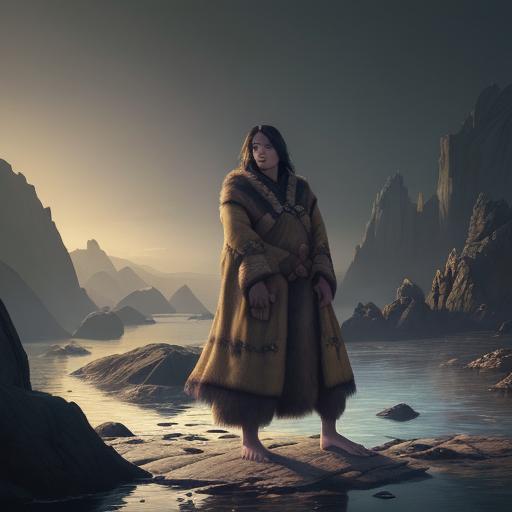
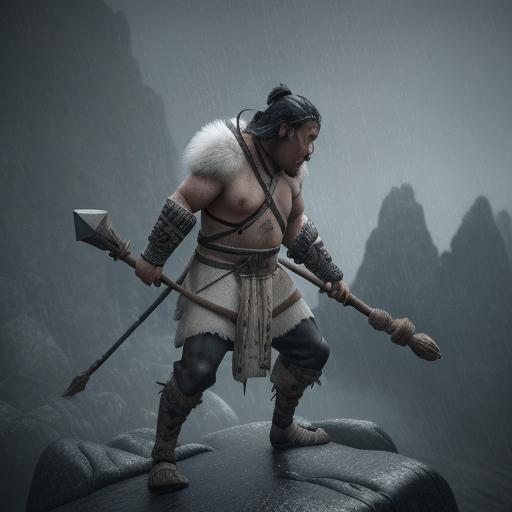
Heavy garments made from seal, sea-lion and other marine hides protect the body. Dark layers, reinforced coverings for hands and feet, and bone or stone amulets answer directly to the climate.
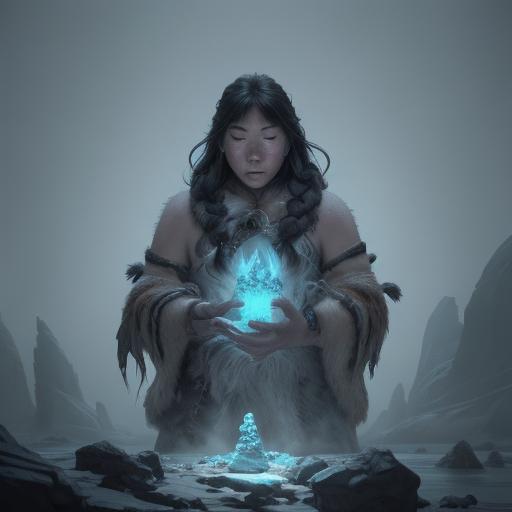
Members of the Triumvirate wear permanent-ice stones called petrafrías, each of a different hue. The objects distinguish religious-political authority and are believed to carry endurance and protection.
Shelter and visual expression
Homes are excavated into black rock or placed inside natural caves. They have little furniture; walls, hides and bone reinforcements exist first to keep wind, flying stone and fatal cold outside.
Vurian art concentrates on figures carved from bone, stone, ice and petrafría. Hermofrolote and the night beasts recur because art functions as warning, devotion and protection rather than leisure.
Sound without celebration
Plomvuria has no established tradition of dance in the recovered record. During rites, bones are struck together and a few horns struggle against the permanent roar of the wind.
This scarcity is culturally revealing: sound is reserved for invocation, warning and collective endurance rather than developed as a separate festive institution.
Food, tools and exchange
With no trees and almost no vegetation, the Vurian depend on raw fish, marine mammals, eggs and whatever the island yields. Hides provide shelter and clothing; bone, teeth, stone, ice and petrafría become tools.
There is no currency. Exchange is communal and based on need. Rainwater is collected, while underground water is feared or accessed clandestinely because the subsurface is considered Hermofrolote's domain.
Education and family
Elders teach survival, ritual and oral history through direct practice. Children learn how to read weather, preserve food, use bone tools and recognize dangers long before knowledge can be separated into abstract disciplines.
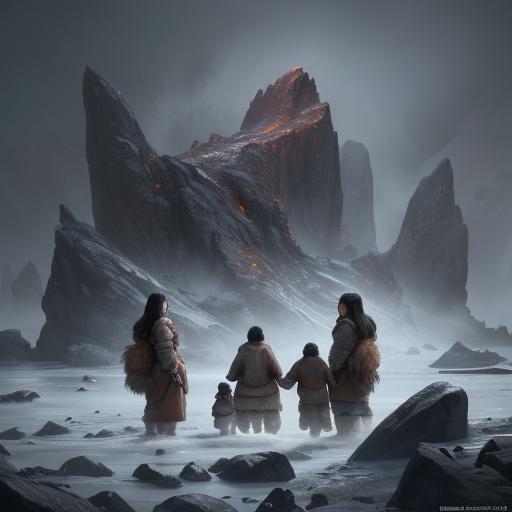
Families are extended and multigenerational because survival requires many hands. Birth is rare and dangerous. Marriage is practical, brief and subject to Triumvirate approval; the archive records consanguineous unions as a consequence of extreme isolation, without presenting them as desirable or biologically harmless.
Identity and an uncertain future
The Vurian use no single national emblem. Geometric bone carvings, petrafrías and representations of Hermofrolote express belonging more effectively than a flag could.
Their primary aspiration is survival without conquest or colonization. Yet isolation, low resources and devotion to an unquestionable authority can preserve identity while also imprisoning it. Plomvuria's future depends on whether endurance alone can remain enough.